
Two people can buy the same car, borrow the same amount, and be offered different interest rates. That sounds like it can't be right, but it's how vehicle loans work. The lender sets each rate on the borrower's circumstances, the amount borrowed and the security, and two borrowers' circumstances can differ. On loans arranged through Motor Vehicle Finance, rates run from 8.00% p.a. to 29.95% p.a. The from rate in an ad is the bottom of that range. Where you land in it depends on those three things, and you see your rate in writing before you sign.
That matters, because the rate you're offered is the rate in your contract. And 8.00% p.a. to 29.95% p.a. is a big gap.
A "from" rate on a car loan in NZ is the lowest rate in a range. The rate you're offered can sit anywhere in that range. The lender sets your rate on your circumstances, the amount you borrow and the security, and you see it in writing before you sign.
What does a "from" rate mean on a vehicle loan?
A from rate is the bottom of a range of interest rates. It's a real rate, but it's the floor, so read it with the top of the range.
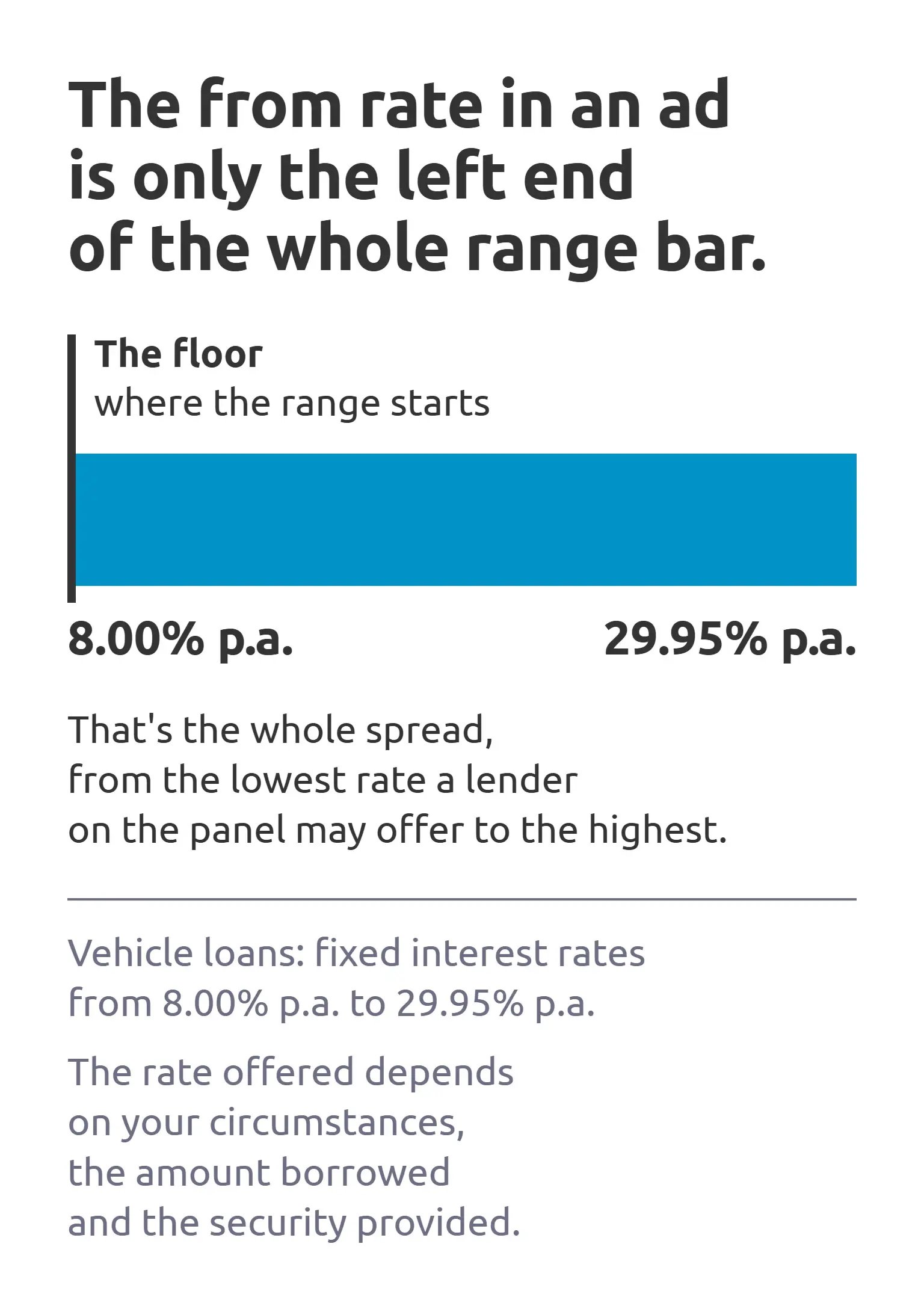
On vehicle loans arranged through Motor Vehicle Finance, fixed interest rates run from 8.00% p.a. to 29.95% p.a. That's the whole spread, from the lowest rate a lender on the panel may offer to the highest.
We're not the lender. We help arrange finance through our panel of lenders. The lender sets your rate. So when you see a from rate in an ad, read it as where the range starts. It says nothing yet about where your loan will sit.
What sets the interest rate you're offered?
The lender sets it. The rate offered depends on your circumstances, the amount borrowed and the security provided.
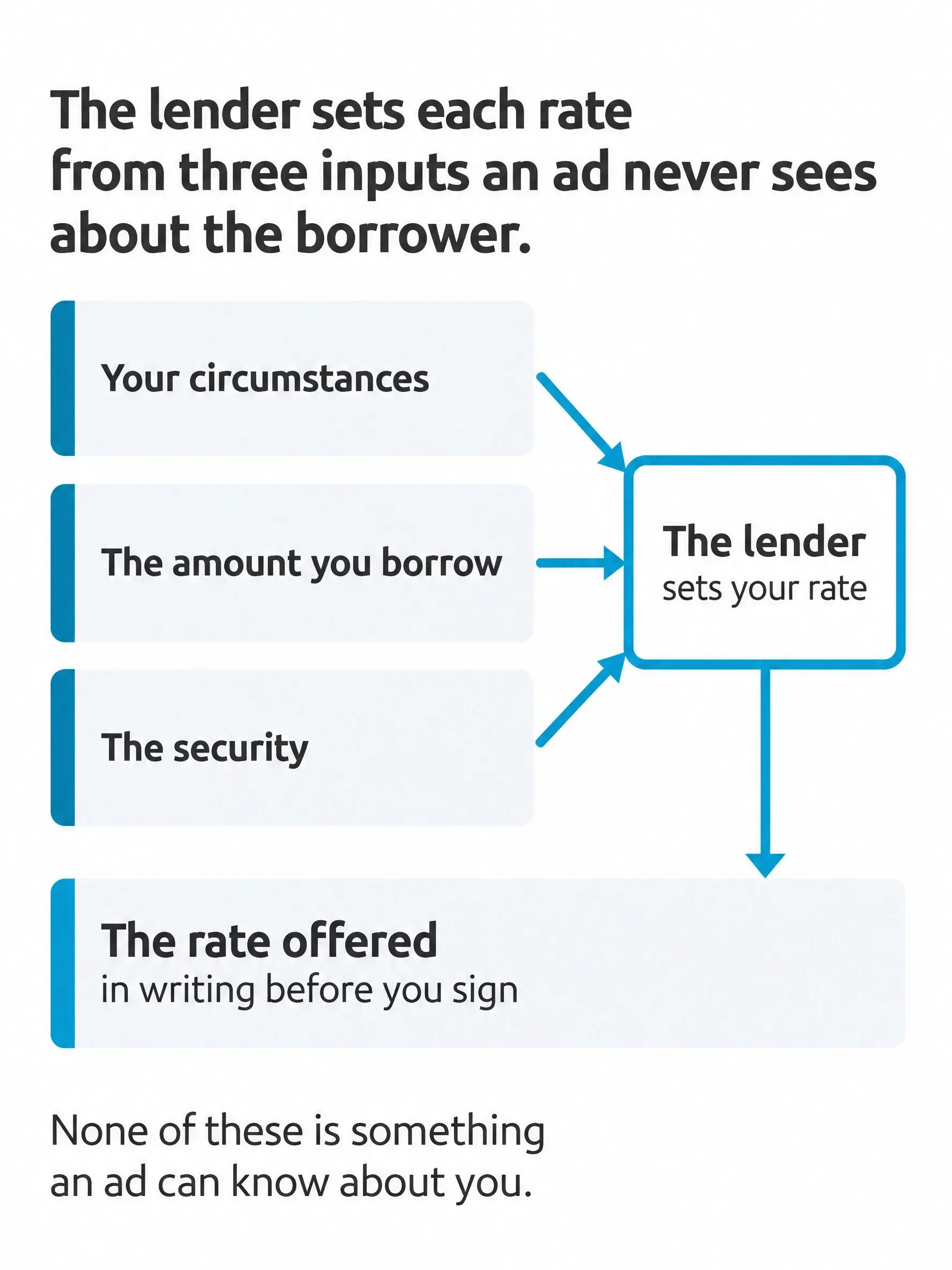
Your circumstances. Your credit history is part of this. Sorted is the Retirement Commission's money guidance service. It says lenders use your credit score "to quickly assess whether to lend to you and what interest rate to charge". It adds that the more risky you are as a borrower, the more they charge in interest.
The amount you borrow. How much you borrow can change your rate.
The security. Consumer Protection says that when you borrow to buy a vehicle, the lender will usually register a security interest in it. That's the lender's claim on the vehicle, and it stays until you finish paying the loan. Sorted says a car loan secured by the car "usually means a lower interest rate".
None of these is something an ad can know about you. That's why the from rate can be the same on every ad while the rates people are offered are not. For how interest is worked out once the rate is set, see how car loans work.
Isn't a from rate just there to get you in the door?
No. It's a real rate, at the bottom of the range. It is the biggest number in the ad, though, and Sorted says interest rates on car loans "can vary widely". If you only ever see the floor, it's easy to think the floor is the deal.
But the floor is only one end of the range. Here are both ends: 8.00% p.a. to 29.95% p.a.
And you don't have to take any ad's word for your rate. By law, the lender has to give you your rate in writing, with the fees and the total, before you sign. That's the number to judge. If it isn't right for you, you don't have to sign.
How do you find out your own rate?
You apply, and you read your rate before you sign anything. In order:
- Read both ends of the range. Look for the top of the range as well as the bottom, so you know how far apart they are.
- Apply. When you apply with us, we start with a soft credit check, which does not affect your credit score. If we submit your application to a lender, that lender may carry out a full credit enquiry, which is recorded on your credit file.
- Read the disclosure statement before you sign. By law, a lender has to give you the key information in writing before you sign anything. That includes the interest rate, how interest is calculated, the default interest rate, all fees and the total amount to repay.
- Look at the total. We'll show you the applicable fees before you proceed. Put them beside the rate and look at the total you'll repay.
What else changes the cost of a vehicle loan besides the rate?
Fees. Two loans at the same rate can cost different amounts once the fees are added.
Sorted says: "A low interest rate can still add up to an expensive loan." The fees it names are establishment, monthly account and default fees. It also says lenders must disclose the total you'll pay, including interest and fees.
On loans arranged through us, fees apply, including a lender establishment fee of up to $375 and an introducer fee of up to $995. Lenders may charge a PPSR fee of between $0 and $14, and some lenders charge ongoing or service fees.
The loan term changes the total too. Our guide to choosing a car loan term covers that.
Other questions people ask about car loan rates
Is a friend's rate a guide to what I'll be offered?
Not really. Their rate was set on their circumstances, the amount they borrowed and their security. Yours will be set on yours.
What's a good interest rate on a car loan?
There isn't one number that's good for everyone, because each rate is set on the borrower's circumstances, the amount and the security. The better test is your own offer: its rate, its fees and its total, read together.
The same car, two different rates
Go back to the two people in the opening: the same car, the same amount, different rates. The ad showed them both the same from rate.
A lender set each person's rate on their own circumstances, the amount and the security. Each could read it, with the fees and the total, before signing. The from rate only tells you where the range starts.
To see the rate a lender offers you, apply for a car loan online. The online form takes about 3 minutes. Approval is subject to responsible lending inquiries and lender criteria.
Vehicle loans: fixed interest rates from 8.00% p.a. to 29.95% p.a. The rate offered depends on your circumstances, the amount borrowed and the security provided. Fees apply, including a lender establishment fee of up to $375 and an introducer fee of up to $995. Lenders may charge a PPSR fee of between $0 and $14, and some lenders charge ongoing or service fees. Full fee information is at motorvehiclefinance.co.nz.
We help arrange finance through our panel of lenders — we are not the lender. Approval is subject to responsible lending inquiries and lender criteria.
Disclaimer: Please note that the content provided in this article is intended as an overview and as general information only. While care is taken to ensure accuracy and reliability, the information provided is subject to continuous change and may not reflect current developments or address your situation. Before making any decisions based on the information provided in this article, please use your discretion, and seek independent guidance.