
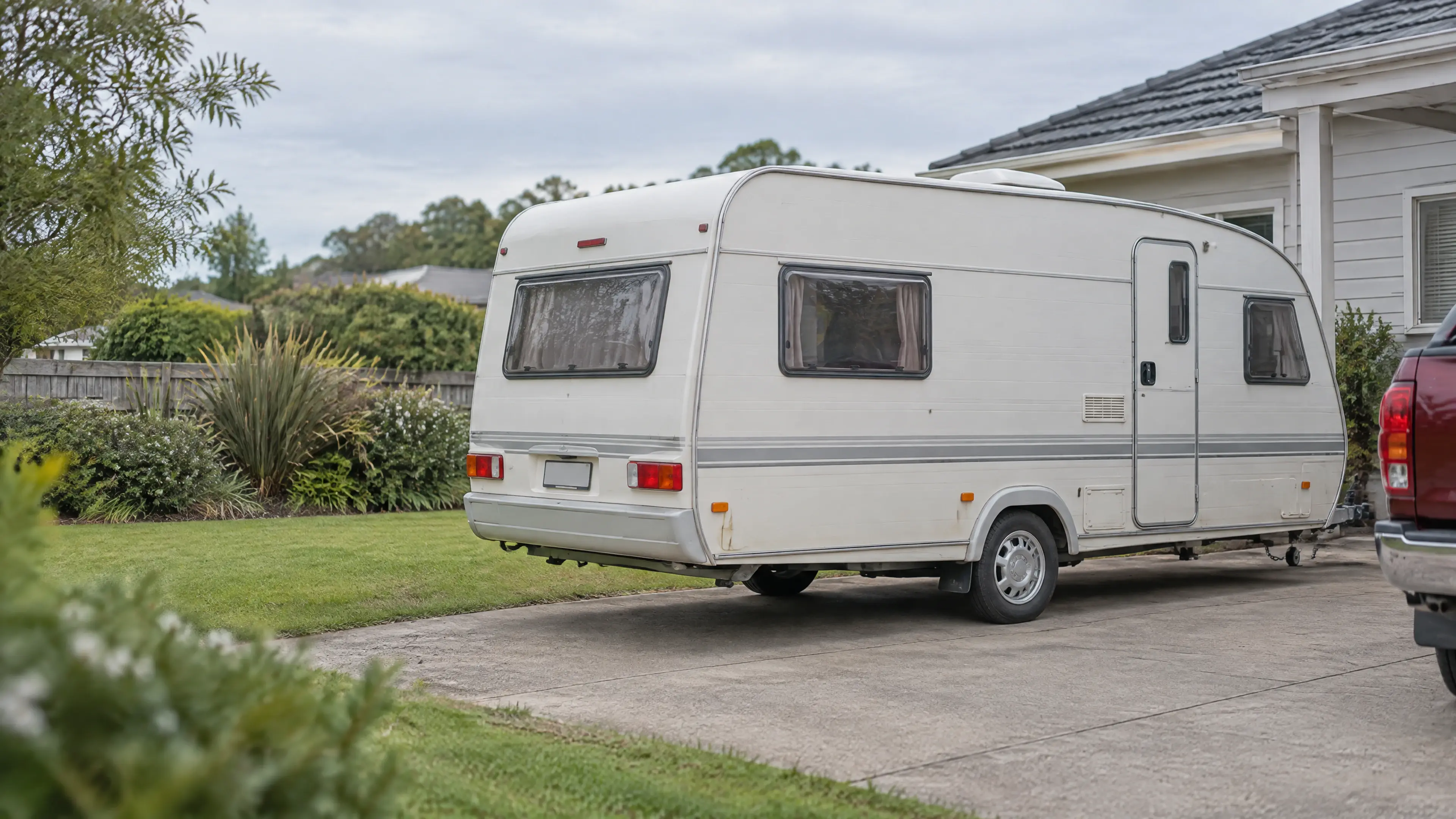
You have found the caravan. Maybe it sits in a driveway across town with a sign in the back window. Maybe it's on a dealer's lot, with summer coming. Either way, the seller wants to know if you're serious. Then you look for finance online and wonder whether a caravan counts. So can a caravan be financed at all?
A caravan loan tends to be bigger than a car loan, and it runs longer. Know each step before you tell the seller yes.
Yes. A caravan or a motorhome can be financed, subject to lender criteria. A specialist explains each step, from your first question.
In New Zealand, Motor Vehicle Finance helps arrange caravan and motorhome finance through a panel of lenders.
How do you apply for a caravan loan?
You apply in six steps.
- Tell us about the caravan or motorhome you have found: the make, the year, the price, and who is selling it.
- Fill in the online form. The online form takes about 3 minutes.
- Have these ready: your income after tax, details of your job, and proof of who you are, such as a passport or a driver's licence.
- We send your application to a lender on our panel. Approval is subject to responsible lending inquiries and lender criteria.
- We'll show you the applicable fees before you proceed.
- If you accept the lender's offer, you sign the loan contract, and then you pick up your caravan.
Every step, explained.
Caravan, motorhome or campervan?
The steps are the same for a caravan, a motorhome or a campervan. Whether you drive it or tow it, it counts as a vehicle. You start the same way: tell us the make, the year, the price, and who is selling it.
Is it harder to finance an older caravan or a private sale?
It depends on the lender's criteria. If the caravan or motorhome meets those criteria, we can help arrange finance on it.
Buying from a dealer or a private seller? We work with both, provided the vehicle meets lender criteria.
It's a fair worry, so tell us about the caravan first. A specialist explains how lenders look at its year and who is selling it, so you have a clearer idea before you give the seller your answer.
Why is a caravan loan different from a car loan?
Caravan buyers ask to borrow more than car buyers. About a quarter of the caravan applications we received from February to October 2026 asked to borrow $50,000 or more. For car applications, it was about 1 in 20.
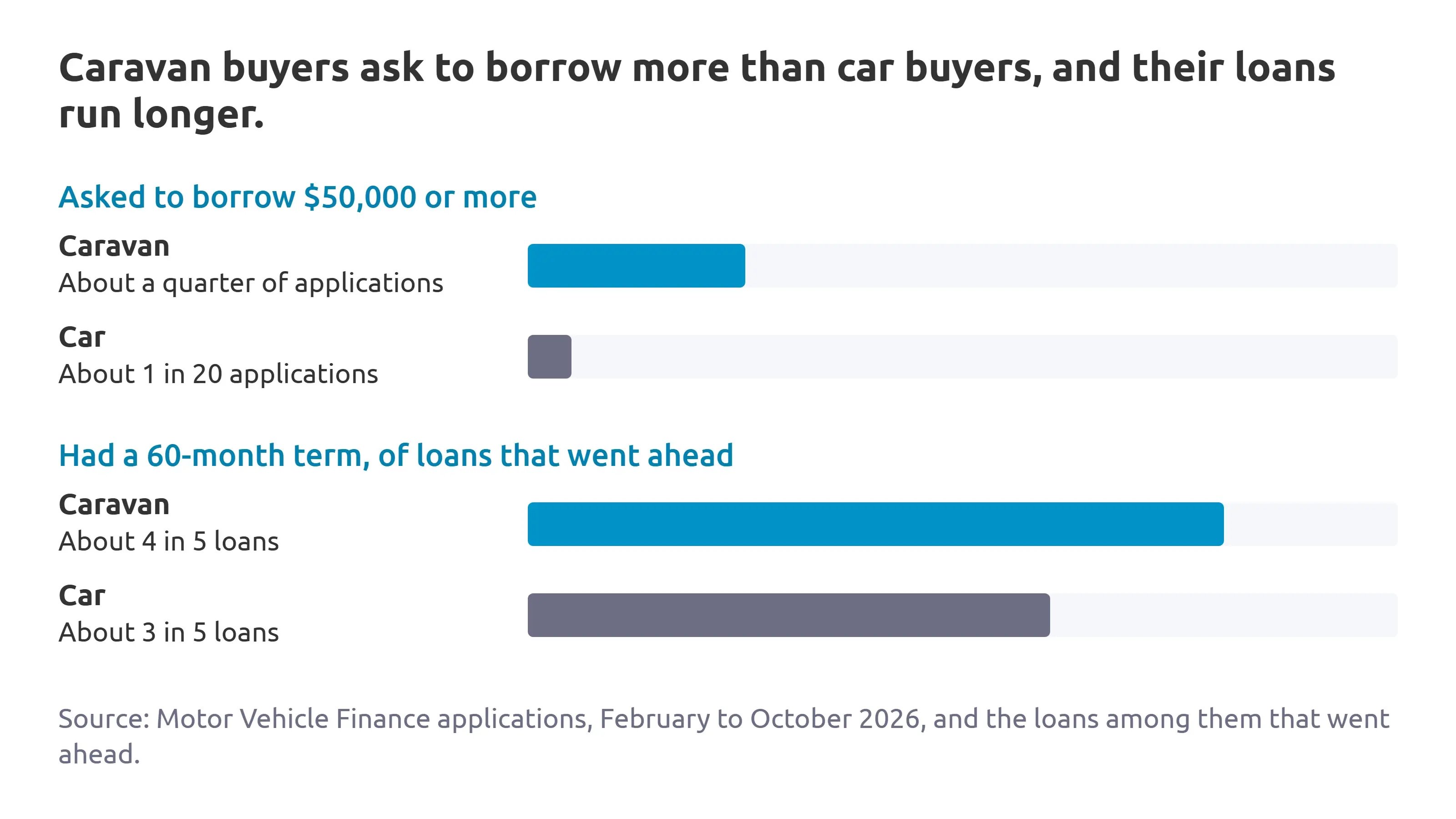
The loans run longer too. About 4 in 5 caravan loans that went ahead had a 60-month term, against about 3 in 5 for cars.
Borrow more for longer and you pay more in total, even at the same rate, so look at the fees and the term in full before you commit.
Rates, terms and who decides
How much can I borrow, and for how long?
Vehicle loans from $3,000 to $250,000. Terms from 12 to 84 months. The amount and term available to you depend on lender criteria and affordability assessment.
What interest rate will I pay?
Vehicle loans: fixed interest rates from 8.00% p.a. to 29.95% p.a. The rate offered depends on your circumstances, the amount borrowed and the security provided. Fees apply, including a lender establishment fee of up to $375 and an introducer fee of up to $995. Lenders may charge a PPSR fee of between $0 and $14, and some lenders charge ongoing or service fees. Full fee information is at motorvehiclefinance.co.nz.
Is Motor Vehicle Finance the lender?
No. We help arrange finance through our panel of lenders, and a lender on that panel makes the decision.
Apply for finance on that caravan
Start by telling us what it is: the make, the year, the price, and who is selling it. Apply for caravan finance.
We help arrange finance through our panel of lenders — we are not the lender. Approval is subject to responsible lending inquiries and lender criteria.
Disclaimer: Please note that the content provided in this article is intended as an overview and as general information only. While care is taken to ensure accuracy and reliability, the information provided is subject to continuous change and may not reflect current developments or address your situation. Before making any decisions based on the information provided in this article, please use your discretion, and seek independent guidance.